From Struggle to Comfort: How Accessible Toilets Transformed the Lives of People with Disabilities
On a sunny Friday morning, in a quiet valley of Kigabiro, Rwamagana district, Eastern Rwanda, golden sunlight dances through tall banana trees, their wide green leaves swaying gently in the breeze. Crisscrossing roads wind through the plantation, creating paths where passengers pause, surrounded by the warmth and life of the lush landscape.
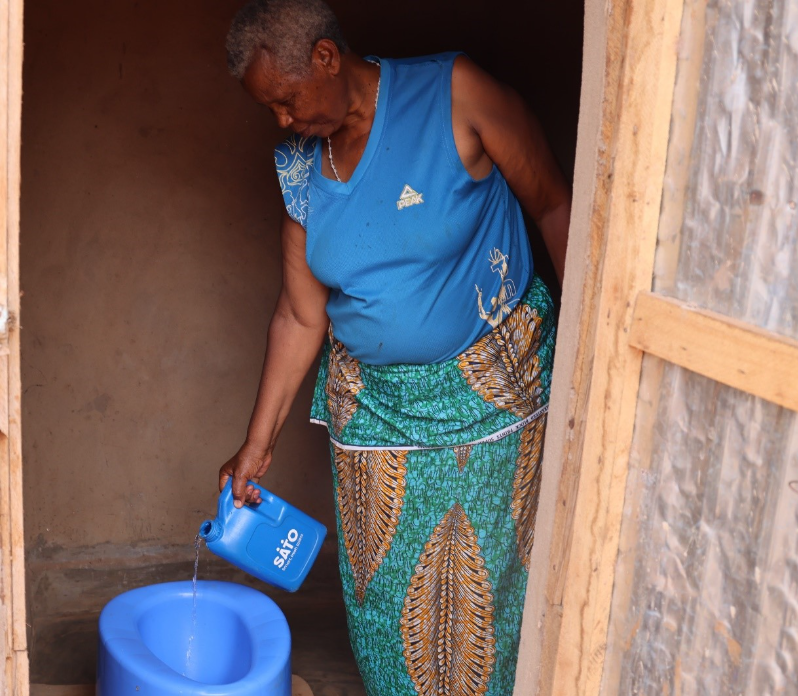
In just a few meters from the road, there is a modest house with a compound made of pencil cactus, a green milky plant often used as a living fence around homes in traditional Rwanda. Inside the compound, a small but thriving kitchen garden greets visitors, with fresh vegetables on the verge of ripening. On this morning, 67-year-old Germaine Murerakazi is preparing for lunch. Observing her closely, she limps on her right leg. "I have a long-standing joint inflammation (arthritis) that left me disabled", Germaine narrates.
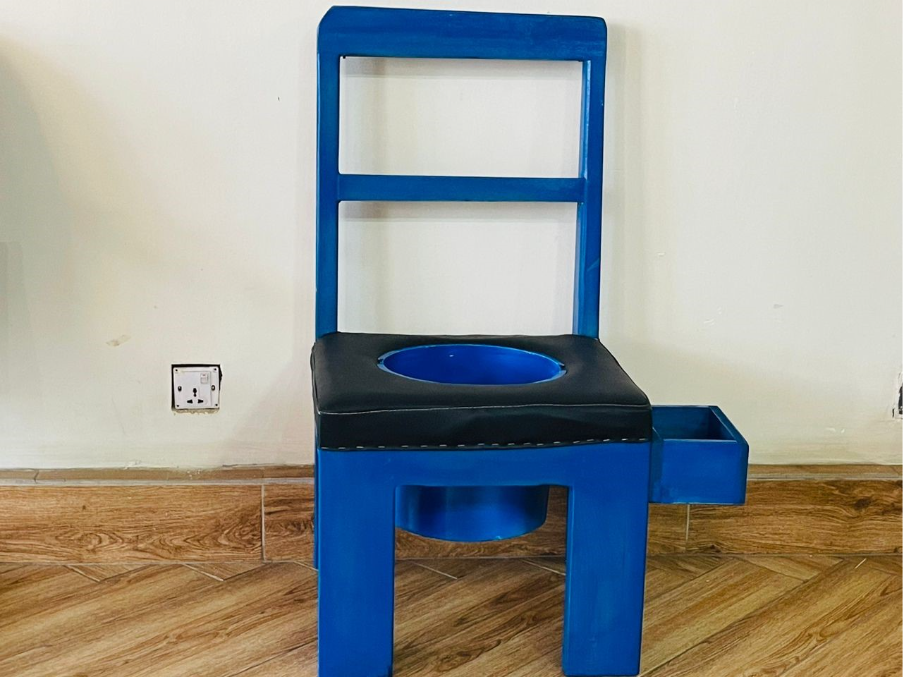
Across the yard, there are two clean toilets, open to the fresh air, and a homemade handwashing facility aside. One toilet is fitted with a SATO pan and another one with a SATO stool. These are innovative, affordable toilet solutions for communities with limited access to water and sanitation facilities. Specifically, a SATO stool is a comfortable sit-down toilet designed for people with special needs, like the elderly and people with disabilities.
After Germaine’s joint sickness, using a pit toilet with an unimproved slab was a painful struggle.
"We had a traditional-normal village toilet. Though it was clean and comfortable, it was very hard for me to use it, provided I had to squat with these arthritic knees," Germaine recalls.
In October 2023, Germaine attended a community mobilization session organized by Isoko y’Ubuzima titled "The Cost of Uncleanliness," Germaine’s mindset shifted. "I realized there is nothing more valuable than life," she recalls. Motivated by this newfound perspective, Germaine sought a loan from her Village Savings and Lending Association called Abizerwa (The trusted ones), a community-based saving and lending group, and gathered the RWF 20,000 necessary to purchase a SATO stool toilet, designed specifically for people with disabilities, from a local sanitation showroom.
"I now have a decent toilet; I can sleep peacefully knowing it can be accessed easily by me and other elderly and disabled people who visit me. Plus, it is very easy to clean it," Germaine shares with a smile. Not only did she invest in her own well-being, but she also went the extra mile, purchasing a SATO pan in the second toilet for other family members and visitors.
For Germaine, the confidence and comfort brought by the new toilet have been life-changing. "Isoko y’Ubuzima came at the right time, and it made me change my mindset hence finding a solution to the difficulties I was facing," she says.
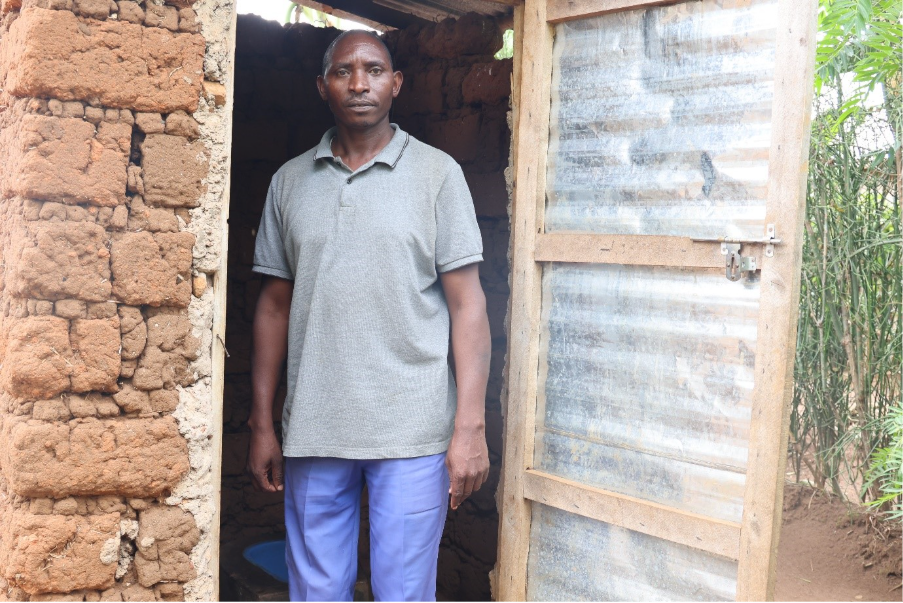
A few miles away from Germaine’s home lives Jean Bosco Nzaramba 46 and his family who echoes similar sentiments. Limping on a paralyzed leg due to poliomyelitis, an illness caused by a virus that mainly affects nerves in the spinal cord, accessing a decent toilet was a constant challenge. Though he had attended sanitation workshops at the Gishari sector health centre as an Isoko y’Ubuzima Hygiene Focal Point, the cost of installing a specialized toilet for people with disabilities remained out of reach. But he took courage to try out something innovative and set a good example: "We can’t mobilize people to adopt improved sanitation and hygiene while we don’t do the same. It’s good to practice what you preach," says Jean Bosco.
In May 2023, he was fortunate to receive a donation of a SATO pan. While it wasn’t the disability-friendly SATO stool, Jean Bosco was determined to make it work. Using the knowledge he got from Isoko y’Ubuzima mobilization sessions, he gave clear instructions to a mason and had it installed in a way that met his accessibility needs. "Before, our toilet barely had a door—just a piece of cloth covering the entry. I was embarrassed to let visitors use it. But now, I’m confident, and my family can use it too comfortably," Jean Bosco proudly explains. Though he still has plans to improve the facility, including paving the entire surface, Jean Bosco is no longer burdened with the worry of toilet access.
Inspired by his own journey, Jean Bosco has taken it upon himself to mobilize 59 other people living with disabilities in his sector, encouraging them to follow suit. "I am very confident that soon they will be able to reproduce the same," he says with optimism.
The stories of Germaine and Jean Bosco highlight how two remarkable individuals living with disabilities have transformed their lives through simple yet impactful changes in sanitation. This is a good example of how accessible sanitation solutions like the SATO stool can make a world of difference for people with disabilities. Their perseverance, fuelled by the support of Isoko y’Ubuzima, has not only improved their quality of life but also empowered them to inspire others in their communities, bringing back dignity, confidence, and comfort.
Isoko y’Ubuzima, committed to improving sanitation services and products, is collaborating with key stakeholders to introduce other innovative, accessible toilet designs that prioritize the comfort and dignity of persons with disabilities and make them available at District Sanitation Centers. Through these efforts, the project aims to foster inclusivity, ensuring that everyone, regardless of physical ability, can benefit from safe and user-friendly sanitation solutions.