
Improved Water Services: How Ruhango’s Rehabilitated Water Supply Empowers Communities
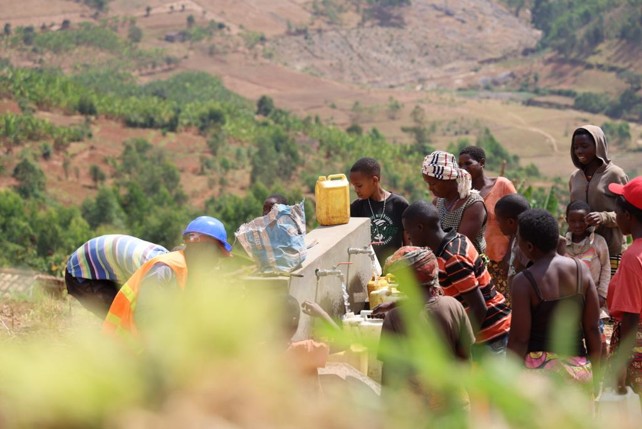
In the heart of Ruhango District, Southern Rwanda, one of the 10 districts where the United States Government-funded Isoko y’Ubuzima project operates, increased water availability and access collaboration, the district embarked on a journey to deliver improved water services with a focus on inclusivity, quality, and equity through the rehabilitation of the Nyiramuhebe-Kanzogera-Muyunzwe water supply system (WSS), a lifeline for the residents of Muyunzwe cell in Kinihira sector.
Ruhango’s commitment to achieving universal access to water, sanitation, and hygiene (WASH) services aligned with Rwanda’s broader vision outlined in the National Strategy for Transformation (NST1) 2018-2024. With an ambitious goal to provide 100% WASH coverage by 2024, the district recognized that old infrastructure and outdated water supply systems hindered progress. Among these systems was the Nyiramuhebe-Kanzogera-Muyunzwe WSS, which had long struggled with inadequate supply, lack of water treatment, and limited reach.
Before its rehabilitation, this WSS served only 830 people, leaving the majority of the community vulnerable due to unreliable and untreated water. The lack of coverage, aggravated by outdated pipelines, posed daily challenges, particularly for women, children, and people with disabilities, who often bore the burden of fetching water.
Recognizing the urgent need for change, Isoko y’Ubuzima, in partnership with Ruhango District, embarked on an ambitious rehabilitation project. The initiative aimed not just to fix pipes but to transform the entire water supply system after establishing a detailed engineering design. By replacing old infrastructure, extending the pipeline from 7.5 km to 11.38 km, and establishing a modern water treatment facility, the project expanded access to clean, treated water for 4,100 people—2,026 women and 1,894 men— (394% increase), bringing much-needed relief to the community.
A Commitment to Inclusivity, Community Engagement and Ownership
The commitment to ensuring safe, inclusive access to water for all brought special attention to vulnerable groups, including children, women, girls, and people with disabilities. Public water points were designed with safety and accessibility in mind, ensuring that everyone could benefit from the improved water services without fear or difficulty.
This holistic approach extends beyond infrastructure. The rehabilitated WSS now provides continuous water access, available anytime, and ensures that residents can fetch clean water within 30 minutes round trip. The water is treated, safe from contaminants, and readily available compared to the intermittent, unreliable supply of the past.
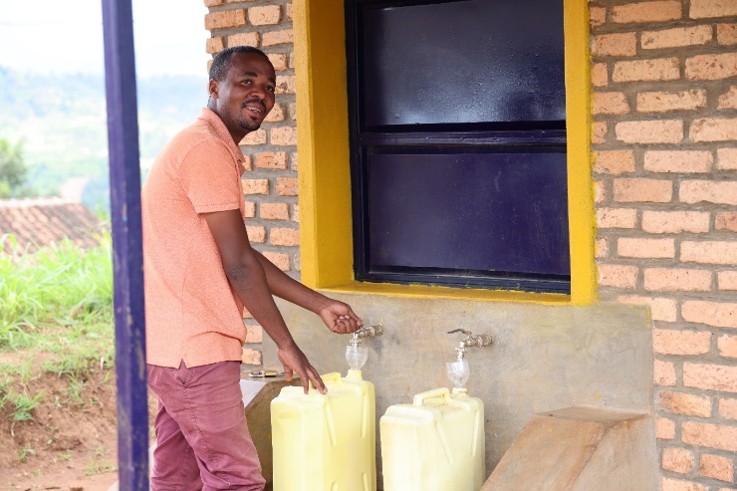
The success of the Nyiramuhebe-Kanzogera-Muyunzwe WSS rehabilitation is a testament to the power of community engagement. From the outset, Isoko y’Ubuzima and Ruhango district staff worked closely with residents, helping them to understand and support the project. Through careful community outreach, the project gained widespread acceptance, with residents releasing land for construction and embracing the shared benefits of improved water services.
This engagement fostered a sense of ownership among the community, with the residents now acting as stewards of the water system, ensuring its sustainability for future generations. This stands as a shining example of how strategic partnerships, visionary planning, and community engagement can lead to sustainable development.
A Catalyst for Socio-Economic Growth
The impact of the rehabilitated WSS goes far beyond the provision of water. It has become a catalyst for socio-economic development in Muyunzwe. The health benefits of clean water are immediate—reduced waterborne diseases, fewer sick days, and lower healthcare costs. With better health comes increased productivity, as individuals can now devote more time to economic activities.
Children, too, benefit from the improved water services. No longer burdened with the task of fetching water, they can attend school regularly, improving their education and future opportunities. For women and girls, the availability of clean water brings newfound freedom. Time once spent collecting water can now be dedicated to education, daily activities, including farming, their main income-generating activity.
The rehabilitated WSS in Muyunzwe shows that access to clean water is not just about meeting a fundamental human need—it is about unlocking the potential for socio-economic growth, empowering women, improving health, and fostering sustainable development.
