
Sanitation and Hygiene Influencers Making the Difference
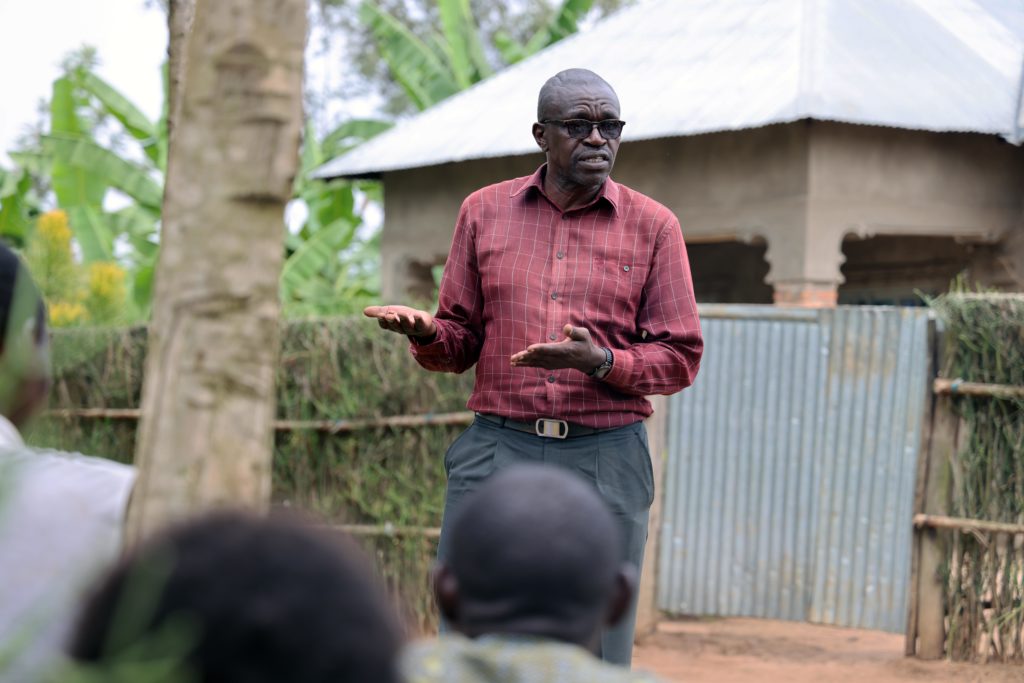
William Musoni spends his days working as a laborer. When he’s not working, he educates communities in Rwanda’s Eastern Province on good hygiene practices, with a special focus on handwashing. As a mobilizer for community savings and loan associations, he also encourages people to invest in and use proper sanitation facilities and products.
"Because I have built a relationship with local leaders, if I request a space to speak about sanitation and hygiene, they always grant my wish," William said." I estimate that I have reached between 6,000 and 7,000 community members during community gatherings and association meetings."
In Rwanda, where there is a vibrant culture of community service, William is one of 1200 people from 10 districts across Rwanda who was trained in the Isoko y’Ubuzima – "source of life" – program, implemented by a consortium led by Water For People in Rwanda and funded by USAID. The program goals are to improve WASH governance, improve drinking water services, and improve sanitation and handwashing services and products.
William emphasizes the importance of handwashing at the right times and how to clean their food and utensils. Suppose they don’t have a handwashing facility in their household. In that case, he helps them build one and then demonstrates how to properly wash their hands – removing accessibility and affordability barriers resulting in poor sanitation and hygiene practices. "They were mostly aware that they must wash their hands after changing diapers or cleaning up a child who has used the toilet and before breastfeeding. But handwashing after using the toilet has not been a common practice and that is changing," said William.
Early on as a community mobilizer, William found the communities he served associated new practices with additional financial costs. But, over time, he and other community mobilizers have seen behaviors and attitudes change leading to fewer reports of diarrheal disease and malnutrition cases.
To make sure people can practice what they learn, the community savings and loan associations promote a culture of saving money so they can purchase and use latrines, soap, and menstrual hygiene products. Association members are linked with product suppliers and, if needed, microfinance institutions.
Vestine Mukantwaza is a member of a savings and loan association in her neighborhood where Isoko y’Ubuzima trained community mobilizer volunteers. "I realized our latrine didn’t meet basic standards…I applied for an RWF 50,000 [about $47] loan," Vestine said. "I improved the latrine concrete, bought cement to improve the shelter, and bought a Sato pan." With William’s lessons in mind, she added a handwashing facility.
With her improved latrine, the frequency of flies entering Vestine’s kitchen and landing on the utensils that she and her family use to eat has greatly decreased. Her family feels safer, and these household improvements have benefits beyond health: "I tell my neighbors that improved latrines dignify you," she said.
Vestine’s investments and behavioral changes show that William’s efforts are valuable. "I have to be persistent and stay motivated because I am convinced that if I change the minds of two or three people, they too can be a positive influence in their communities."
